Global Site - English
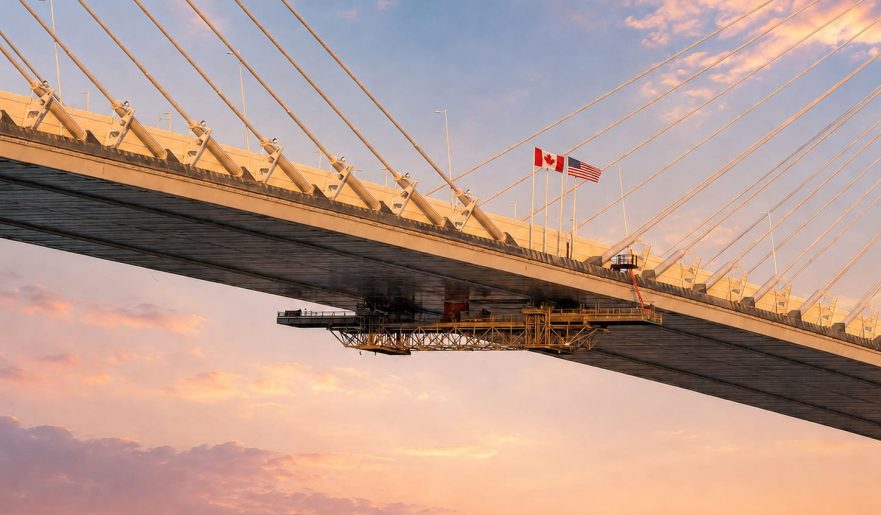
Our scope supports new bridge construction, permanent inspection access and repair work on existing assets. We work with contractors, designers and owners on equipment that needs to operate in difficult geometry, with limited crane access and in live transport environments.
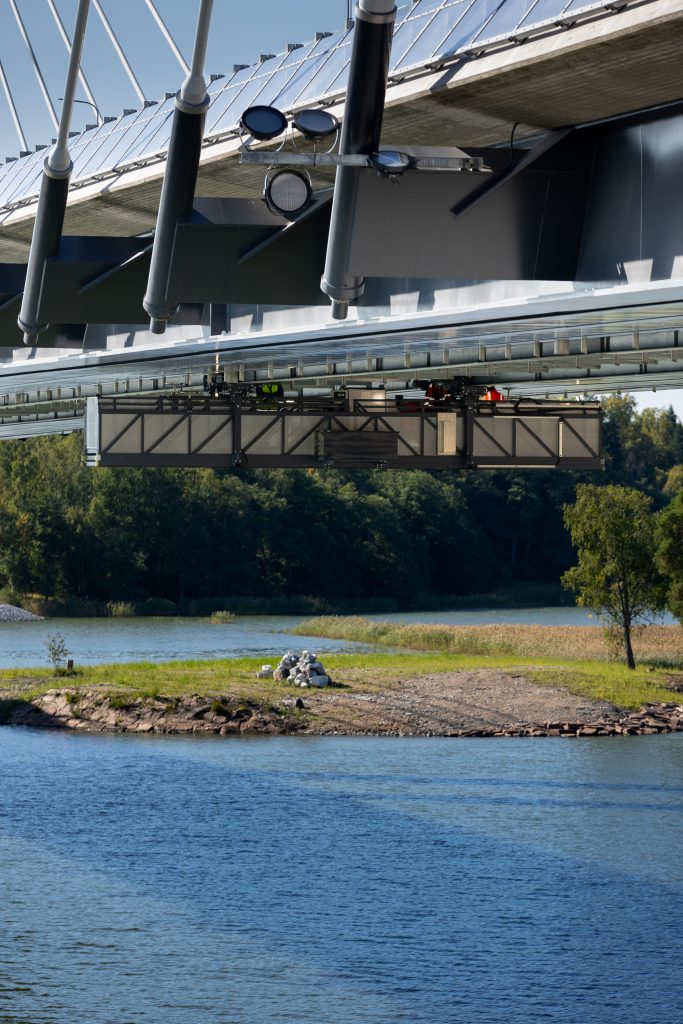
Bridge equipment must support very different needs throughout the asset’s life. During construction, the priority is to move crews, formwork, and structural components through the erection sequence. Once the bridge is open, the focus shifts to inspection, maintenance and repair.
IAS supports both phases. That allows construction equipment and permanent access requirements to be considered as part of the same bridge strategy rather than as separate problems.
The erection method determines which equipment families make sense. Balanced cantilever work, span-by-span construction, and precast erection each create different lifting, access and safety requirements.
| Equipment | Typical bridge application |
|---|---|
| Form travelers | Cast-in-place balanced cantilever construction from each pier |
| Movable scaffolding systems | Span-by-span casting between piers |
| Beam launchers and segment hoists | Placing precast girders and raising segments to deck level |
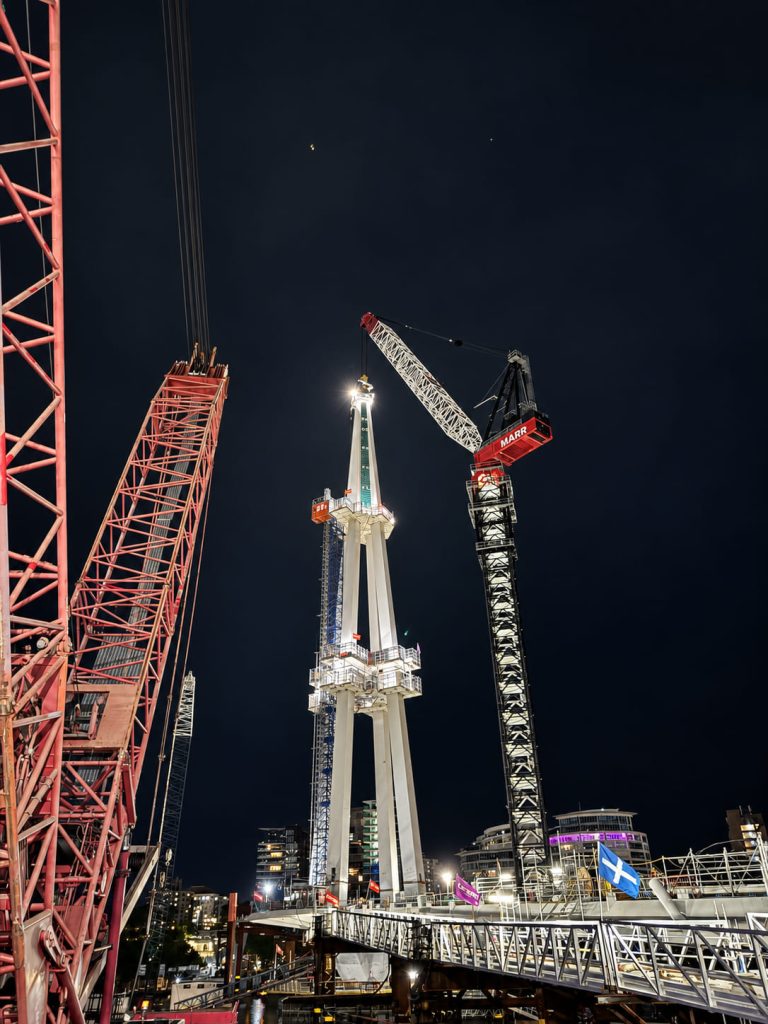
| Derrick cranes | Lifting at deck or pylon level where ground craneage is limited |
| Cantilever carriers | Supporting work beyond the deck edge |
| Pillar and finishing platforms | Access for pier faces, parapets and finishing work |
| Welding gantries and heavy-lift platforms | Steel deck welding and positioning of heavy components |
Each machine is developed around the structure that will carry it and the sequence it needs to support. Load cases, clearances and movement paths are coordinated with the bridge design so the equipment can work with the project rather than around it.
Once the bridge enters service, access becomes a long-term asset requirement. Under-deck areas, pylons, stay cables and anchorage zones still need safe access for inspection and planned maintenance. Permanent systems can include under-deck gantries, stay-cable travelers, tower inspection equipment and other bridge access equipment developed around the structure. Planning rails, anchorages, parking positions and power early gives owners more flexibility after handover.
Bridge geometry often decides whether a standard access system can work at all. Variable-depth decks, inclined towers, V-shaped piers and cable-stayed structures can interrupt a normal travel path or leave very little space for equipment.
IAS works from the bridge model and the full movement route. The access system can then be shaped around the soffit, pier form, pylon geometry and available clearances.
Under-bridge access platforms and traveling gantries provide repeated access to the soffit where ground-based equipment is impractical. This becomes especially valuable over water, live traffic, or rail corridors.
The system can be designed around the deck profile and how it needs to pass over piers or other structural elements. Working load, parking position, and maintenance tasks also influence the final arrangement.
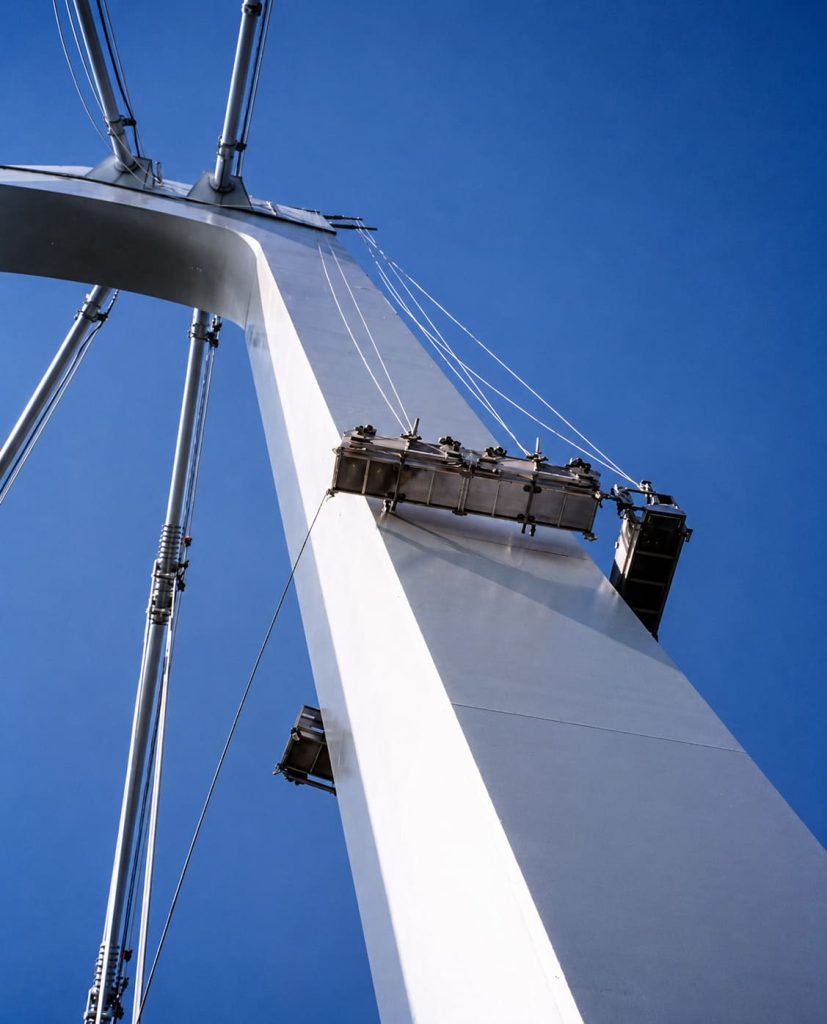
Cable-stayed bridges create access needs along inclined cables and tall pylons. Stay-cable travelers and gantries can support inspection and repair work along the cable route. Tower inspection equipment can provide access to pylon faces and anchorage areas.
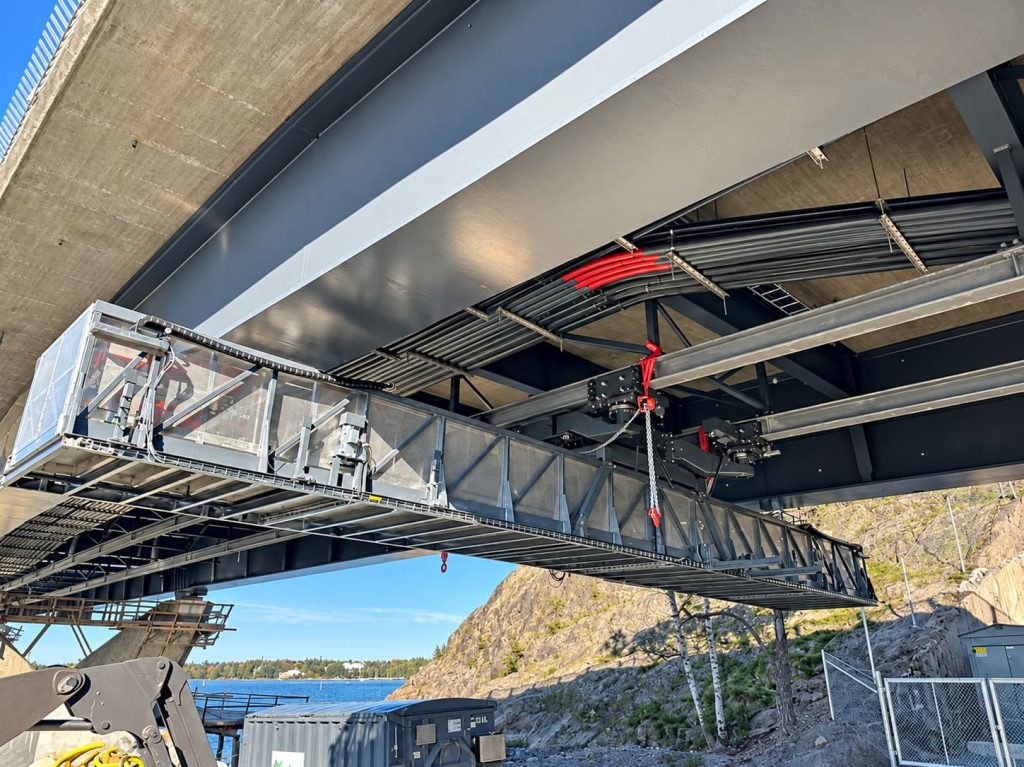
Repair access should be designed around the work being carried out, with safety considered alongside the repair method. Coating, concrete repair, cable work and inspection all place different demands on the platform and the structure supporting it.
IAS can develop bridge maintenance equipment tailored to the repair scope, access window, and traffic or marine restrictions. Localized work may suit suspended systems or davits. Longer programs across several spans may favor a traveling gantry or other permanent access arrangement.
For existing assets, the starting point may be an installed system that needs assessment, refurbishment or replacement. The support strategy can include structural review, functional testing, parts and operator support where required.
A bridge build is one of the most exposed work environments in civil engineering. Crews operate above live traffic, rivers, estuaries or active rail. A dropped tool is a public-safety event. A beam launcher that behaves unexpectedly during a repositioning stroke is a project-stopping incident. For contractors operating in that environment, safety is priority number one, and it is the first design input on every machine we deliver.
That mindset comes from the IAS working-at-height heritage. Every form traveler, segment hoist and under-deck gantry is designed around the fatigue life of the carrying structure, the clearance envelope above the live asset, and the behavior of the equipment under abnormal conditions. Machinery risk assessment follows EN ISO 12100 and EN ISO 14121, and lifting attachments on segment hoists and beam launchers follow EN 13155. Permanent inspection platforms that stay with the bridge after handover reference EN ISO 14122 for the access they provide to maintenance crews.
The applied set is not one rulebook. CE-marked equipment inside the EU answers to the Machinery Directive 2006/42/EC. Road moves between fabrication and site reference EN 12195-1 for load restraint. Projects in North America or APAC bring their own site-safety regulations. Our engineering teams adapt the design to the governing framework of each bridge, confirmed with the project team at design review.
Permanent access is easier to coordinate while the bridge is still being designed. Support points, rails, anchorages and parking areas can be incorporated before the permanent works are fixed.
Early access planning also helps the owner think beyond construction. Inspection routes, maintenance tasks and repair requirements can be considered alongside the bridge geometry so future work does not depend on repeated temporary access.
Infrastructure Access Solutions operates within Alimak Group for complex bridge work. The wider group has more than 40 years of experience with bridge equipment, with equipment contributing to over 50 bridges across 20 countries.
That experience brings together construction equipment, permanent access, and long-term asset support within a single engineering network. Project teams can draw on design, manufacturing, testing and site support capability without turning the bridge access strategy into several disconnected scopes.
Work with IAS to coordinate construction equipment and long-term access around the bridge design.
The erection method sets the starting point. Balanced cantilever work may use form travelers, while span-by-span construction can use movable scaffolding systems. Precast schemes may require beam launchers or segment hoists. Span length, deck geometry and access around the piers then shape the final equipment concept.
The soffit profile, pier geometry and required travel path are major factors. The design also needs to consider working load, clearance over water or traffic, and where the system will park when it is not in use.
As early as practical during bridge design. Rails, supports, anchorages and parking areas are easier to coordinate before the structure is complete. Early planning also gives the owner more options for long-term access to inspection and maintenance.
Yes. IAS develops custom access systems around the actual bridge geometry and movement path. The structural model, clearances, and operating requirements are used to shape the system rather than to force a standard configuration onto the bridge.
Depending on the equipment and project scope, support can include assessment, testing, parts, refurbishment planning and operator support. Existing systems can be reviewed to determine whether they remain suitable for the required inspection or maintenance work.
Useful starting information includes general arrangement drawings, deck and pier geometry, and the intended construction or maintenance method. The team will also need the expected loads, movement route, site restrictions, and any limits imposed by traffic, rail, or marine operations.